Posts

Showing posts with the label aikido

What is Ki?

Image
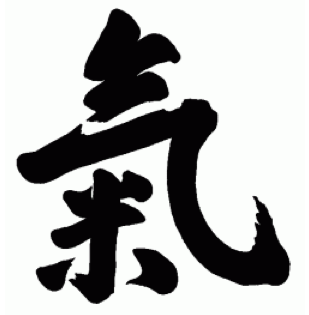
The concept of Ki , or lifeforce, exists in many cultures. In Chinese it's Chi or Qi , in Sanskrit,  Prana . In western culture, while we may say someone has a soul that is distinct from their physical body, the soul is connected to the individual.  Ki, as it is understood in Japanese culture, is a universal force that permeates everything. Individuals may manifest more or less ki, but it is a connecting force between everyone and everything. In Japan, ki is an everyday concept that's found in many common phrases . For example the phrase "O  ki o tsuke te," which means "take care," literally means, "apply ki ."   "O genki desu?" the most common way to say "How are you?" means, literally, "Do you have ki ?"   "Ii k imochi," a phrase heard often, particularly in popular songs, means "(What a) good feeling." "Ii" means "good" and "kimochi" literally means having, o...

Everything Sucks

Image
Recently I heard that a colleague had had bad year. Her boyfriend broke up with her, she lost her job, and on the day in question, her sweet, loving dog bit her in the face. Now, while all these are things no one wants to have happen, I was interested that she grouped them together to define the year as a bad one. We construct entire landscapes of self image and judgment, based on some pretty insubstantial evidence! Finding some quiet time to be mindful of inner thoughts can really help illuminate this. It's astounding how many of our simple thoughts or even feelings in the body are accompanied by a judgment or an emotion. Wow. My brain just seems hard-wired to calculate, measure, and compare me to others, and to make predictions about the future based on my calculations and comparisons. That would be fine if the predictions were useful, but, frankly, most of them are not. By the time I'm consciously aware of these thoughts, they seem inevitable or given, for example: ...

Four Basic Principles for Living

Image
The four basic principles of Kokikai Aikido are: Keep One Point Relax Progressively Positive Mind Correct Posture These principles underlie every part of the practice of this wonderful art of self-defense. They are also fantastic principles for living everyday life. I tell new students at Rutgers that if they only take one class they can get enduring benefit if they keep these principles in mind. Here's one way I put them into practice. There are times when I get agitated, angry, or can't stop thinking about something (even though I would like to). First step is to notice that I am agitated, angry, or etc. Then I pick one of the principles and focus on it. It's amazing how even the "physical" principles, like keeping good posture, or physically relaxing my body, can affect your state of mind.

Making Subtle Changes In Direction

Image
I'm a novice violin player. It's pretty difficult for a beginner to get any decent kind of sound out of a violin, so any time I make a step forward, it's usually accompanied by a gratifyingly audible change in my playing. Lately I've been amazed at how thinking differently about the direction of the bow has made a really dramatic improvement in my sound. Last summer I took a week's worth of workshops from Andrea Larson at Ashokan Northern Week . One thing she had us practice was, on an upbow, imagining shooting the bow over our shoulders. Normally I think of "drawing" the bow as a sort of rubbing action that involves more downward pressure on the strings. When I use the "shooting" idea, the direction of my effort is more across than down . The incredible thing is that to make this change in my sound, I barely have to do anything - I just have to remember to think about it. We have a lot of similar ideas in aikido. One example is used in...

Herbie Hancock and Wayne Shorter: Artists can Save the World

Image
"You either have to be part of the solution, or you're going to be part of the problem."         - Eldridge Cleaver We all tend to blame others - society, politicians, boss, girlfriend -  for what's wrong in our lives. Sayings like the one above redirect the responsibility back to ourselves. Frankly, though, sayings like this mostly just make me feel guilty. Apart from writing an obscure blog and some charitable donations, I never think of myself as part of any "solution." Teaching aikido  and playing music are hardly going to save the world, right? That's why I was heartened to read this letter from Herbie Hancock and Wayne Shorter . In an open letter,  " To the Next Generation of Artists, " they offer their thoughts on how we all can work to increase peace and understanding in the world, despite so many trends that are painful and discouraging. Here are a few beautiful phrases from the letter , but it's really, really worth re...

Why We Volunteer

Image
Another Kokikai Aikido Winter Camp is over, and afterward I had the inevitable day of rest and a little sadness. Announcements, Kokikai Aikido Winter Camp 2016 It's quite complex to put together an event like this, and a lot of people worked in beautiful harmony behind the scenes so that Sensei could focus on teaching over 280 participants. As I think about all that effort, there are a few things that come to mind that make it so worth it: Sensei. Sensei is amazing. He shows us the incredible potential power that human beings have. And then he teaches us how to do it!  The Kokikai Community. Kokikai is a bunch of really amazing people, and as a volunteer, anything we can do to bring them all together in one place, and then practice together, is worthwhile, not just for the volunteers, but for everyone in Kokikai.  It Feels Good. Teachers I know - of various disciplines - have commented that their students are less and less willing to "help out" when asked....

Plan to Fail

Image
My husband teaches computer science, and he says it surprises his students when he teaches them to expect failure . He says students are not used to failing. In high school teachers focus on their successes amd they're given lots of encouragement. But when you're doing something you've never done before, you're going to fail and fail until you do it right, and then you'll move on. If you're doing something no one has done before, you'll fail even more before you succeed. In the end, you'll have lots more failures under your belt than successes. In my husband's opinion, if his students are not failing a lot, they're not trying hard enough. One day I commented to my piano teacher that I was finally starting to enjoy the sound of my own playing. "Don't get too used to that!" he said sardonically.  His explanation described essentially the same idea: if we're working to achieve mastery, we're doing something that most ...

Catching "Correct Feeling"

Image
In Kokikai Aikido practice, we're continually trying to catch what Maruyama Sensei calls correct feeling . This feeling combines stillness and readiness; awareness of everything around us and intense focus; strength and deep relaxation. That paradoxical nature of  correct feeling  is one of the things that fascinates me most about aikido. I try to catch that feeling when I play music, especially when I improvise. I've spoken to people who engage in other practices, from writing poetry to playing basketball, who completely get this idea. In one technique we practice, kokyudosa, catching correct feeling is essential. In kokyudosa, two students sit facing each other on their knees. Each extends their arms. Uke (attacker) holds nage's (defender's) wrists. Nage uses correct feeling to push uke backward. Kokyudosa, done correctly, is mind bending. A very small person can toss a big body builder. But if you don't have correct feeling,...

Five Steps to Achieving the Impossible

Image
I recently decided to learn a song . It’s one that’s typical of a certain Irish style of singing which is very wordy, often humorous, with lots of alliteration and  internal rhymes , and is sung quite fast. I’ve always been crappy at memorizing pretty much anything. For all that people call me talented and artistic, poetry reading and acting were never options for me. My aikido students  know that I can’t even remember the four basic principles: I get to three and then get stuck.  Memorizing a nine-verse song with long words that have to be exactly right or the rhymes don’t work, and no room for breathe or think? Out of the question. But I wanted to. And I was armed with some new tools for mastery that I've been using really successfully in my aikido and music practice.  So here’s what I did: Start with absolute confidence that it was possible .  Practice S-L-O-W-L-Y .  I have a cool program called Amazing Slow Downer . I set it up in my car t...

Using Rhythm to Create "Lift"

Image
Photo by Doug Heacock Learning to play the violin has been great for me, because it brings another perspective to things I experience in aikido (and vice versa). One of these is how you can use rhythm to move peoples' bodies. Using rhythm to create "lift"in music I play a lot of traditional music - Irish, American, Scottish, English, French Canadian, and more. Much of the traditional music repertoire is written for dancers. Of course, dancers need to know where the beat is. But musicians can also help make the dancing more fun by adding something called "lift." "Lift" makes the music feel lighter and more energetic. Some people do this unconsciously, but sometimes you have to focus on what you're doing or not doing to get it right. It might mean emphasizing the up-beat, or lightening up certain repeated notes, or even by creating spaces or rests. The most important point is that it's dance music and it should make you feel like dancing...

Sooner, Not Faster

Image
I'm a pianist and I practice the martial art of  Kokikai Aikido . Lately I've been working on speeding up. Part I - Music Usually I'll practice a tune till it sounds great when I play it slowly. Then I turn up the metronome. As soon as I do that I can feel my shoulders getting tense, I can't hit any of the notes, I forget what I'm doing and everything sounds like h*ll. I've come to realize that what's holding me up is not lack of technical ability, but my own mind. My brain is stuck in "slow mode." I'm used to hearing the music slower in my head. So when I play fast, it feels like I'm always trying to catch up. My brain is a half step behind what my fingers are doing. I realized that instead of just going "faster," I have to think "sooner." I have to think ahead , and then I'll be ready to move my fingers at the right time. I can tell you that takes a lot of attention to do that. My brain constantly wa...

You Have To Practice Taking a Rest

Image
Today my piano teacher (who is awesome) was trying to help me improve my mediocre improvisation skills. We were talking about the fact that the improv sounds much better when you leave intentional gaps, spaces, or pauses in the music. They add a rhythmic component, they focus the listener's attention on what they heard, prepare them for what they're about to hear. They help me gather my thoughts before I come up with more ideas, and they just make the whole thing sound better. But even though I know this, I don't do it. "You have to practice it," Dave said. " You have to practice taking a rest ." I wrote that down.... .....in BIG LETTERS.

Advice

Image
My brother Ben lives in a big city that definitely has its dangerous spots. Recently he asked me for some advice on how to stay safe. "I'm going to give you four things," I said. I could see I'd already impressed him by having a ready answer. He knows I’m a martial arts instructor , but that stuff is never real to your own family. At that time there was a subway strike in the city, and everyone was seeking alternate transport. Overground trains and buses were jammed, the roads were packed with private cars, taxicabs, bikes, and the sidewalks were overflowing with hurrying, disgruntled pedestrians. "First," I said, as we jostled along a sidewalk blocked by a huge bus queue, “just improve your posture . Stand up straighter." This caught Ben's attention. I think he figured his sister the black belt would demonstrate some primary aikido move or teach him to stick his keys out between his knuckles. Posture? As self defense? But Ben listened. He ...

Simple Ideas, Challenging Practice

Image
Recently after an aikido seminar, a bunch of us convened at a local restaurant with Sensei . As I was chatting with someone next to me I looked up, and Sensei met my eye across the table. "Judy, what do you think of Sensei this time?"  I laughed and said, "Sensei, you're even more amazing than before !" (First principle of ethical speech : Is it true? Yes. He was definitely more amazing.) Somewhat tongue in cheek, since the answer is the point of all his teaching, I asked him, "Sensei, how do you do it ?" He pulled up his sleeve to show me (for probably the 100 th time) the way he can keep his forearm and biceps totally slack and soft. And he said, (for probably the 1,000,000 th time,) "Judy: the secret is, I never use muscle !" A friend of mine once lamented, "Why is it you have to be in therapy for years before you hear the thing the therapist has been telling you ever since the first day?" Looking back over my po...

Creating More With Less

Image
I recently attended a violin workshop with the renowned Irish fiddler, Kevin Burke  (who's actually English and lives in Oregon). He was talking about adding rhythm to the music with certain notes that are repeated on the beat. Below is a snippet from Walsh's Hornpipe . Even if you don't read music, you can see that the same note is repeated rhythmically. (I made those notes red.) When you listen Kevin play it, (it's very the first tune on this video ,) those notes really stand out. How to Make More with Less Kevin said that to give this tune more rhythm, you have to play these repeated notes more lightly. He said that most people make the mistake of playing them heavily, and then they sense the tune doesn't have enough of a rhythmic feel, so they play them even more heavily, and so on and so on. Man, does that sound like aikido.

My Sneaky Scheme

Image
Have you ever had this happen? You try to persuade someone of something, and they just won't listen. but three days later they read it in the news and it's as if they came up with the idea themselves - they tell you about their great idea. It's frustrating! But it's understandable. Sometimes we have a hard time grasping a new idea when it's presented "straight on." It's like it has to come at us from a different angle, and then we have to absorb it as our own. I think it's like that with my practice. I have to absorb new ideas, think about them, and make them my own. Sometimes I write about aikido and sometimes I write about music. Most of the time I think the concepts I write about relate to both, (though I don't always mention it). You may wonder, "What audience is she writing for, that practices aikido and music? That can't be more than 100 people on the planet!" Here's my sneaky scheme: Both music and aikido a...

Why I Don't Sexualize Interactions on the Mat: A Personal Account

Image
Long before I was an aikido teacher, I made a decision to remove sexuality from my interactions on the mat. It happened because I found myself inappropriately attracted to another student, and the way I acted as a result bothered me. I'm not sure that the change was obvious to anyone but myself, but for me the benefits were immediate and far-reaching. I stopped unconsciously judging other students by whether they were attractive. I could more clearly see all their human qualities, including their aikido ability. I'm embarrassed to admit that until then, I gravitated toward people who were attractive or attracted to me. Now I have a much wider range of potential friendships and interactions. When I stopped flirting - either overtly or subtly, I stopped being concerned whether what I was doing looked good or was impressive. I started paying more attention to others:  what they needed, what they heard, what they did. I started to develop much more close friendships w...

Is it OK to Sleep with your Students?

Image
What's the Attraction? When I first started aikido we used to go out after class and stay out pretty late. A client, hearing about this, said, "Oh,  aikido ? You have to watch out for those  aikido  people..." He said where he was from (San Francisco), aikido instructors were notorious for having affairs with their students. I started wondering: why would aikido teachers have this special reputation? Any teacher is in danger of "falling into" sexual relationships with students of the opposite sex*: students look up to teachers, teachers enjoy the adulation, and so it goes. But I think there's a reason why aikido has a "reputation." First: aikido is   so cool!  When you're start taking aikido you realize you're developing a kind of power you never imagined. It's  awe-inspiring.  And there's your teacher, who  has that power . It's really easy to confuse that great feeling with a sexual attraction. Second: most of the...

What's Next?

Image
One of my biggest challenges in playing piano is remembering to think ahead. When I don't, it usually ends badly. I have a habit of going on autopilot. I'll be playing everything smoothly, my left hand is right on with the rhythm, my fingers are moving by themselves, and my mind drifts. Then here comes that unusual chord and...Crash! Or, I'm improvising and I'm in the groove, and I start listening and drifting, til I realize I'm repeating my ideas. I think, "OK, what now? "Crash! I have put a post-it on my music stand. It says, "Think Ahead." We all go on autopilot when we get comfortable at something. It's a natural that when we become competent at something we  stop devoting so much attention to it . But in order to be creative,  I need  some  things to be on autopilot and yet at the same time I need to be consciously aware and ready for what's next. I wondered how to practice this. I know I need to practice it a lot. My  aik...

Getting Off the "OK Plateau" - Breaking Through Walls in Your Practice

Image
Joshua Foer , author of Moonwalking with Einstein, gave a  talk on 99u  about the techniques that experts use to become great at what they do. As a martial artist and musician, I'm always looking for ways to improve and to practice more efficiently. The OK Plateau In 1967 a much-cited textbook  was written about how people acquire skills. The authors said that we go through three phases. Think of the way we learn to ride a bicycle, learn to type, or drive: Cognitive Phase - We devote a lot of mental energy to the skill, thinking about the tasks, discovering new ways to do better Associative Phase - We start to feel that we're improving, we make fewer errors Autonomous Phase - This is when we decide we're competent. We "turn on autopilot," doing a lot of the tasks without a lot of cognitive thought.  Foer calls the third phase "The OK Plateau." It's fine to reach a plateau when I'm OK at typing or driving, but not when I'm practi...